
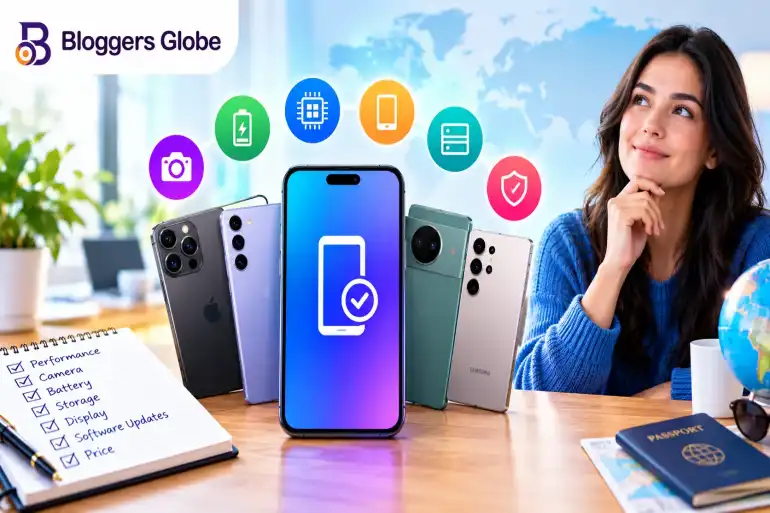
How to Choose the Right Smartphone for Your Needs: Complete Buying Guide
Choosing a new smartphone can be confusing when almost every brand promises a better camera, faster performance, longer battery life and smarter features. The challenge is not finding a phone with impressive specifications. It is finding one that fits your everyday needs, budget and expectations for the next few years.
Whether you are buying a phone for work, college, photography, gaming, travel or everyday communication, the right choice depends on how you actually use it. A premium flagship may be ideal for someone who records professional videos, while a reliable mid-range phone can offer better value for someone who mainly browses the internet, uses messaging apps and watches videos.
This guide explains how to choose the right smartphone by comparing the features that matter most, avoiding common buying mistakes and understanding the differences between buying a phone in India and purchasing one in international markets.
Table of Contents
1. Start With Your Everyday Needs
Before comparing phone brands or specifications, think about what you do most often on your current phone. Your daily habits are a better starting point than advertisements, online rankings or the number of cameras on the back.
- Everyday use: Prioritise dependable performance, good battery life, a clear display and reliable connectivity.
- Photography and social media: Look for natural colours, good low-light photos, stabilised video and enough storage for pictures and clips.
- Gaming: Focus on sustained processor performance, graphics capability, cooling, display responsiveness and battery life.
- Work and business: Consider security updates, call quality, multitasking, video-call quality and compatibility with work applications.
- Study and online classes: Choose a readable screen, dependable battery, sufficient storage and a camera and microphone suitable for video calls.
- Travel: Prioritise battery life, navigation, camera quality, network compatibility and convenient charging.
Write down the three features you value most. This simple step helps you avoid paying extra for features that may look impressive but make little difference to your daily experience.
2. Set a Realistic Smartphone Budget
Smartphones are available at many price points, from basic devices to expensive flagship models. The most expensive phone is not automatically the best smartphone for your needs. A good purchase balances performance, reliability, useful features and the total cost of ownership.
As a broad planning framework, the following price bands can help buyers begin comparing options. These are illustrative ranges rather than fixed market categories; prices vary by country, brand, storage configuration, taxes and sales offers.
| Buyer segment | Illustrative budget | What to prioritise |
|---|---|---|
| Budget buyers | Under US$200 or ₹15,000 | Reliable everyday performance, battery life, adequate storage and essential security updates |
| Value-focused buyers | US$200–$400 or ₹15,000–₹30,000 | Balanced performance, good cameras, a quality display and long-term usability |
| Upper mid-range buyers | US$400–$700 or ₹30,000–₹60,000 | Better cameras, faster performance, premium displays and additional features |
| Premium buyers | Above US$700 or ₹60,000 | Flagship performance, advanced camera systems, premium materials and ecosystem features |
These ranges should not be converted directly between currencies to compare value. Taxes, import duties, local competition and manufacturer pricing can make the same phone substantially more expensive in one market than another.
Remember to include accessories, a protective case, screen protection, insurance if needed and possible repair expenses in your budget. If a phone requires a separate charger, check that cost before purchasing it.
3. Choose Between Android and iPhone
The operating system affects the way you use your phone every day. Android and Apple's iOS can both provide excellent experiences, but they differ in device variety, customisation, app management and integration with other products.
When Android makes sense
- You want a wider choice of phone sizes, designs and prices.
- You prefer more home-screen customisation and flexibility.
- You want options such as foldable phones, gaming-focused devices or specialised camera hardware.
- You want to compare devices from brands such as Samsung, Google, Motorola, OnePlus, Xiaomi and other manufacturers available in your market.
When an iPhone makes sense
- You already use products such as a Mac, iPad or Apple Watch.
- You prefer Apple's integrated software and hardware experience.
- You regularly record videos or use apps that fit your existing workflow.
- You want to remain within the iOS ecosystem and are comfortable with its pricing and customisation approach.
Neither platform is automatically better for every buyer. Compare the specific phones, their update policies, available apps, accessibility features and total costs before deciding. Switching platforms may also involve moving photos, messages, contacts, passwords and paid apps, so consider migration before buying.
4. Check the Processor and RAM
The processor, also called the chipset or system-on-chip, influences app speed, gaming performance, image processing, power efficiency and support for advanced features. However, a processor's name or benchmark score does not tell the whole story.
For normal activities such as messaging, browsing, navigation and video streaming, a well-optimised mid-range phone may be more than sufficient. People who edit videos, play demanding games or frequently run several applications should pay closer attention to processor performance and heat management.
RAM helps a phone keep applications available in the background. As a general starting point:
- 4GB RAM: May suit light use, but can feel restrictive with demanding apps or extensive multitasking.
- 6GB–8GB RAM: A practical range for many everyday users and a broad selection of mid-range phones.
- 12GB RAM or more: May benefit heavy multitasking, gaming and certain demanding workflows, depending on the software and processor.
These are guidelines, not universal performance guarantees. iOS and Android manage memory differently, and virtual or extended RAM advertised by some manufacturers is not equivalent to physical RAM. Read independent reviews of the exact model rather than choosing a phone based on a single number.
5. Choose the Right Storage Capacity
Storage determines how many apps, photographs, videos, downloads and offline files you can keep on your phone. A device with excellent performance can still become frustrating when its storage fills up.
- 64GB: Best considered for very light use, especially if many files are stored elsewhere. It can become restrictive quickly.
- 128GB: A reasonable starting point for many everyday users.
- 256GB: Worth considering for people who take many photographs, download media or keep a large collection of apps.
- 512GB or more: Useful for extensive video recording, large games and people who store substantial amounts of content locally.
Operating system files and preinstalled applications occupy part of the advertised capacity, so usable storage will be lower than the number printed on the box.
Also check whether the phone supports a microSD card. Many modern premium phones and iPhones do not offer expandable storage. Cloud storage can help, but it may require a subscription and a reliable internet connection.
If storage is already a problem on an existing device, these Android storage management tips can help free up space without immediately deleting important files.
6. Compare Display Quality and Size
The display is one of the features you interact with most. It affects reading comfort, video quality, gaming, outdoor visibility and the overall feel of a phone.
LCD versus OLED
LCD displays can provide good image quality at affordable prices. OLED and AMOLED displays generally offer deeper blacks and strong contrast, making them attractive for watching films, viewing photos and using dark mode. However, the quality of an individual display matters more than the technology label alone.
Refresh rate and brightness
A 90Hz or 120Hz refresh rate can make scrolling and supported animations look smoother than a traditional 60Hz screen. It is useful, but it should not outweigh more important factors such as battery life, brightness or software quality.
Brightness is particularly important for people who use their phones outdoors. If possible, check how readable the display is in direct sunlight and whether automatic brightness works well.
Screen size and comfort
Larger displays are useful for reading, gaming and watching videos, but they can be difficult to operate with one hand. Smaller and lighter phones may be easier to carry and use throughout the day. Consider the weight, width, screen shape and grip rather than relying only on diagonal screen size.
7. Look Beyond Camera Megapixels
Camera specifications can be misleading because a high megapixel count does not automatically produce better photographs. Sensor quality, lens design, image processing, stabilisation and lighting all affect the final result.
When comparing smartphone cameras, look for the following features:
- Main camera quality: Check detail, colour accuracy, dynamic range and performance in everyday lighting.
- Low-light photography: Read reviews that show indoor photographs and night scenes rather than relying only on bright outdoor samples.
- Optical zoom: A dedicated telephoto camera can provide more useful detail at longer focal lengths than simply enlarging a digital image.
- Ultra-wide camera: Useful for landscapes, architecture, group photographs and travel.
- Video stabilisation: Important for walking videos, travel clips and social media content.
- Front camera: Worth checking if you frequently attend video calls, record yourself or create short-form content.
AI camera features can improve certain photographs, remove distractions or assist with editing. Nevertheless, processing styles differ, and some phones may produce images that look overly sharpened or artificially bright. Look at unedited sample photographs before making a decision.
If photography is a priority, compare actual camera samples from the phones on your shortlist. A well-tuned camera system with fewer lenses may be more useful than a device advertising several low-quality cameras.
8. Evaluate Battery Life and Charging
Battery life is one of the most important factors for people who travel, work outdoors, use navigation or spend long periods away from a charger. A large battery capacity can be helpful, but it does not guarantee longer runtime.
Battery performance also depends on the processor, display, software optimisation, mobile signal strength, background applications and the way you use the phone.
When comparing phones, consider:
- Real-world battery test results and typical screen-on time.
- Charging speed and the time required to recharge the device.
- Whether a compatible charger is included in the box.
- Support for wireless charging if it matters to your routine.
- Battery replacement availability and repair costs.
- Battery health features and charging limits, where supported.
Fast charging is convenient, but it is not a substitute for good battery endurance. A phone that lasts through your normal day may be more useful than one that charges exceptionally quickly but frequently needs to be plugged in.
For users of Android devices, these Android battery-saving tips can also help reduce unnecessary power consumption.
9. Check Software Updates and Security
Software support is one of the most overlooked parts of choosing a smartphone. A device may have impressive hardware at launch but become less attractive if it stops receiving security updates after a short period.
Before buying, check the manufacturer's official support policy for the exact model. Look for:
- How long the phone is expected to receive operating system upgrades.
- How long security updates will continue.
- How frequently updates are delivered in your country or region.
- Whether important features are available in your language and market.
- Whether the manufacturer has a good record of delivering promised updates.
Longer support can improve value because it allows you to keep the phone for more years without immediately losing access to important security fixes. It can also make the device more appealing to a future buyer, although resale value is never guaranteed.
Do not assume that every phone from the same brand has an identical update policy. Entry-level models, premium devices and carrier-specific variants may have different support arrangements.
10. Check 5G, Network Compatibility and Connectivity
Buying a 5G smartphone does not automatically mean that it will work with every mobile network around the world. Network compatibility depends on supported frequency bands, the carrier, the device variant and local network requirements.
This is especially important when buying a phone while travelling, importing a device or purchasing a model intended for another country.
Before paying, confirm the following:
- Network bands: Check the exact model number against the frequency bands used by your mobile carrier.
- Carrier compatibility: Confirm that the device supports the carrier's network and activation requirements.
- SIM options: Check physical SIM slots, dual-SIM functionality and eSIM support if needed.
- Unlocked status: Make sure the phone is not restricted to a particular carrier if you want to change providers.
- Wi-Fi and Bluetooth: Check compatibility with your existing routers, headphones, watches and accessories.
- Navigation: Confirm that GPS and other location services meet your needs.
Some imported phones may lack certain local network bands, carrier features or warranty coverage. Even if a device connects to a network, features such as voice over LTE, Wi-Fi calling and eSIM activation may vary. Verify these details with the carrier before buying.
11. Consider Durability, Warranty and Repair Costs
A smartphone is a long-term purchase, so durability and after-sales service matter as much as its launch-day specifications. A sturdy device that can be repaired affordably may provide better overall value than a more fragile phone with expensive replacement parts.
Look for these practical details:
- Water and dust resistance: Check the phone's official IP rating and understand its limitations. Water resistance can decrease with wear and does not guarantee protection against every liquid or accident.
- Screen protection: Find out whether replacement displays are readily available and how much repairs cost.
- Build quality: Consider the frame, back material, buttons and overall grip.
- Repair availability: Check for authorised service centres and access to genuine parts.
- Warranty: Read what is covered, how long coverage lasts and whether accidental damage is excluded.
- Insurance: Compare premiums, deductibles, exclusions and claim limits before purchasing a protection plan.
Warranty coverage can be especially complicated when a phone is imported. A manufacturer may offer different service terms in different countries, so a global brand name does not guarantee international warranty support.
12. Choose a Smartphone for Your Specific Needs
Different users need different combinations of features. Use the following guide to decide which specifications deserve the most attention.
| User type | Features to prioritise | What you may not need |
|---|---|---|
| Students | Battery life, sufficient storage, reliable performance and a good front camera | Expensive flagship camera systems |
| Business professionals | Security updates, dependable connectivity, multitasking and video-call quality | Gaming-focused features unless needed |
| Mobile gamers | Processor, graphics performance, cooling, display responsiveness and battery | Premium camera hardware that will rarely be used |
| Photographers and creators | Camera consistency, video stabilisation, storage and file-transfer options | Features that do not improve the intended workflow |
| Frequent travellers | Battery endurance, network bands, navigation, eSIM options and durability | Carrier-specific features unavailable at destinations |
| Older adults or first-time users | Readable display, simple controls, accessibility options and reliable support | Complex features that add little practical value |
| Budget-conscious users | Reliable everyday performance, essential security updates and repairability | Paying a premium for headline specifications |
Students and professionals who use their phones alongside computers may also find this guide to choosing a laptop for study useful when planning a complete technology setup.
13. Smartphone Buying Tips for India and International Buyers
The best smartphone deal depends partly on where you live. Prices, taxes, trade-in programmes, carrier offers and warranty terms can differ significantly between countries. Compare the total cost in your local market instead of assuming that a phone is cheaper simply because its advertised price is lower elsewhere.
For buyers in India
- Compare prices across authorised retailers, the manufacturer's official store and reputable online marketplaces.
- Check bank discounts, exchange offers and sale conditions carefully. An advertised discount may depend on a specific payment method or trade-in.
- Verify 5G band compatibility with your mobile operator and the exact phone variant.
- Confirm GST-inclusive pricing, warranty terms, service-centre access and the availability of replacement parts.
- Compare charging accessories, storage variants and repair costs before deciding between two models.
For buyers in the United States, United Kingdom, Canada and Australia
- Check whether the phone is carrier-locked or sold unlocked.
- Compare the total price after sales tax, VAT or other applicable charges, as advertised prices may not include every cost.
- Review carrier financing carefully, including monthly obligations, trade-in conditions and early cancellation terms.
- Check compatibility with local network bands, eSIM activation and carrier-specific calling features.
- Confirm the manufacturer's regional warranty and the cost of repairs in your country.
For international travellers and imported-phone buyers
Do not rely only on the model name. The same smartphone can have different model numbers, network capabilities, SIM configurations and regional software features. Check the exact variant before importing it or purchasing it abroad.
Also consider whether you will be able to return the device if it is incompatible, defective or different from the advertised configuration. Shipping costs, customs charges and limited warranty coverage can eliminate the savings from a lower overseas price.
14. Is a Refurbished or Older Flagship Phone Worth Buying?
A refurbished smartphone or an older flagship can offer strong performance and premium features for less money than a newly released premium device. However, the value depends on the phone's condition, battery health, software support and the reliability of the seller.
Before purchasing a refurbished or pre-owned phone, check:
- Whether the seller provides a clear return period and written warranty.
- Battery health or battery replacement history, where that information is available.
- Screen condition, camera operation, speakers, microphones, charging ports and buttons.
- Whether the phone is carrier-locked, reported lost or stolen, or restricted by an outstanding payment agreement.
- Whether activation locks and previous-owner accounts have been removed.
- How much official repair and battery replacement will cost.
- How many years of software and security support may remain.
A newer mid-range phone may be a better choice than an older flagship if it has a longer support window, a healthier battery and a more suitable warranty. Compare the complete ownership experience rather than choosing based only on the original launch price.
15. Common Smartphone Buying Mistakes to Avoid
Several common mistakes can lead to disappointment even when the phone initially appears to be a good deal.
- Buying only for the megapixel count: Camera quality depends on more than resolution.
- Choosing the highest RAM number: Software optimisation and processor performance also matter.
- Ignoring software support: A phone with limited updates may become a poor long-term purchase.
- Buying too little storage: Apps, photographs and videos can consume available space quickly.
- Assuming every 5G phone works everywhere: Regional bands and carrier compatibility must be checked.
- Ignoring the total cost: Accessories, repairs, financing and insurance can increase the final expense.
- Trusting every online review: Look for detailed tests, real sample photos and independent opinions.
- Paying for unused features: Foldable displays, advanced zoom and gaming hardware are useful only when they fit your needs.
- Overlooking seller credibility: A suspiciously low price may come with limited returns, unclear warranty terms or a questionable device history.
For a phone used for banking, work accounts and personal communication, security also deserves attention. Follow these practical home Wi-Fi security tips to help protect connected devices and your home network.
16. Final Smartphone Buying Checklist
Before placing an order, use this checklist to compare your shortlisted phones. A device does not need to lead every category; it needs to perform well in the areas that matter most to you.
- Does the phone fit your budget without creating unnecessary financial pressure?
- Does the operating system suit your preferences and existing devices?
- Is the processor powerful enough for your everyday apps and games?
- Does it have enough storage for your expected use over the next few years?
- Are the display size, brightness and refresh rate suitable for your needs?
- Does the camera perform well in the situations you photograph most?
- Can the battery comfortably support your normal routine?
- Is the software-update policy clearly stated by the manufacturer?
- Is the exact model compatible with your mobile carrier and network?
- Are warranty coverage, service centres and repair costs acceptable?
- Is the seller trustworthy, and can you return the phone if necessary?
- Have you compared the total price, including accessories and applicable taxes?
Compare at least two or three shortlisted models against these questions. If one phone consistently meets your priorities at a reasonable price, it may be a better purchase than a more expensive device with specifications you will rarely use.
Frequently Asked Questions
How do I choose the right smartphone for my needs?
Start by identifying your main uses, such as everyday communication, photography, gaming, study or work. Then compare your budget, operating system, performance, storage, battery life, camera quality, software support and network compatibility. Prioritise the features you will use most often.
Which specifications matter most when buying a smartphone?
For most buyers, the most important specifications are reliable performance, sufficient storage, good battery life, a quality display, dependable cameras and long-term software support. The ideal balance depends on your budget and daily activities.
How much RAM is enough for a smartphone?
Six to eight gigabytes of RAM can be a practical starting point for many Android users. Light users may be comfortable with less, while heavy multitaskers and gamers may benefit from more. RAM requirements vary by operating system, application and device optimisation.
Is 128GB storage enough for a smartphone?
128GB can be enough for many everyday users who mainly use messaging, browsing, social media and streaming. People who record lots of videos, install large games or keep extensive media libraries may prefer 256GB or more.
Is Android better than an iPhone?
Neither is universally better. Android offers a broad range of devices and customisation options, while iPhones offer Apple's iOS experience and integration with its ecosystem. Choose based on budget, preferred features, software support and compatibility with your other devices.
How important are software updates when buying a phone?
Software and security updates are important for protecting your device, maintaining compatibility and extending its useful life. Check the official update commitment for the exact model before buying rather than assuming all phones from a manufacturer receive the same support.
Should I buy a 5G smartphone?
A 5G phone may be a sensible long-term choice if 5G services are available or expected in your area. However, confirm network-band compatibility, carrier support and local coverage. A 5G label alone does not guarantee that every phone will work on every network.
Is it better to buy a new budget phone or a refurbished flagship?
A new budget phone may offer a fresh battery, a new-device warranty and a longer remaining software-support period. A refurbished flagship may provide better cameras or performance. Compare the device's condition, battery health, remaining updates, seller warranty and total repair costs before deciding.
When is the best time to buy a smartphone?
Good deals may appear during major shopping events, seasonal sales, trade-in promotions or after a newer model launches. There is no single best time for every phone or country. Track the price of your shortlisted model and compare the final price rather than relying on the advertised discount percentage.
Can I use a smartphone purchased in another country?
Often, but not always. Check the exact model number, supported network bands, carrier-lock status, SIM and eSIM compatibility, local calling features and warranty coverage. Import taxes and repair limitations may also affect whether an overseas purchase offers good value.
Conclusion
Learning how to choose the right smartphone is less about finding the phone with the biggest specifications and more about understanding what makes a device useful in everyday life. Performance, camera quality, battery life, storage, software support and network compatibility all deserve attention, but their importance varies from person to person.
Set a realistic budget, compare a few suitable models and check independent reviews before making the final decision. Buyers in India and international markets should also verify local pricing, carrier compatibility, warranty coverage and repair availability.
The right smartphone is the one that meets your real needs, remains reliable over time and delivers good value for the money spent.


