
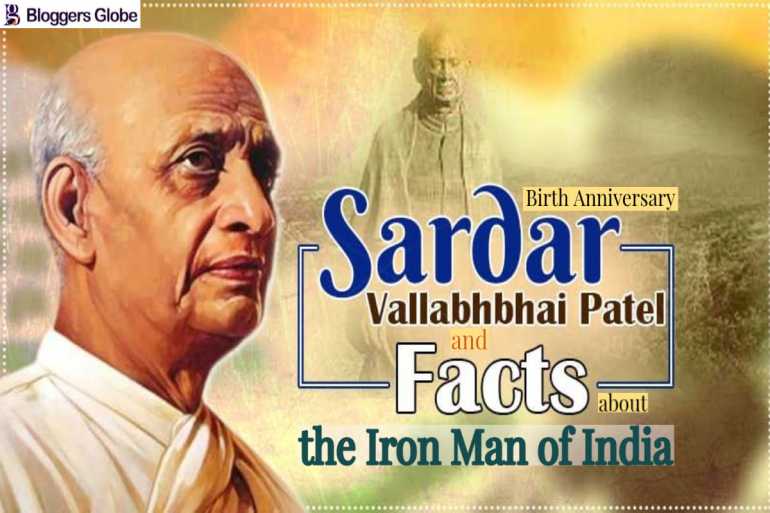
National Unity Day: 8 Facts About Sardar Vallabhbhai Patel & His Legacy
National Unity Day, also known as Rashtriya Ekta Diwas, is observed in India every year on 31 October to commemorate the birth anniversary of Sardar Vallabhbhai Patel. Known as the Iron Man of India, Patel played a crucial role in India's freedom movement and, after independence, in bringing hundreds of princely states into the Indian Union.
Sardar Vallabhbhai Patel was born on 31 October 1875 in Nadiad, Gujarat. His life is remembered for his leadership, determination, administrative ability and strong commitment to national unity. National Unity Day provides an opportunity to remember his contribution and reflect on the importance of maintaining unity and integrity in a diverse country like India.
Patel was not only a prominent freedom fighter but also one of the key leaders involved in shaping the administrative and political foundations of independent India. His work during the integration of princely states earned him a lasting place in Indian history.
What Is National Unity Day?
National Unity Day or Rashtriya Ekta Diwas is observed on 31 October, the birth anniversary of Sardar Vallabhbhai Patel. The Government of India introduced the observance in 2014 to recognize Patel's contribution to India's unity and integrity.
The day encourages citizens to appreciate the strength that comes from India's diversity and to remember the efforts made by leaders who worked toward building a united nation after independence.
National Unity Day is also marked by awareness programmes, unity-related events, marches, pledges and activities organized by educational institutions and government organizations across the country.
Who Was Sardar Vallabhbhai Patel?
Sardar Vallabhbhai Patel was an Indian lawyer, freedom fighter and political leader who became one of the most influential figures of the Indian independence movement. He worked closely with Mahatma Gandhi and became an important leader of the Indian National Congress.
Patel initially built a successful career as a lawyer in Gujarat. His involvement in public life increased through movements connected with farmers and colonial taxation. His leadership during the Kheda Satyagraha and later the Bardoli Satyagraha strengthened his reputation as an effective mass leader.
His association with Gandhi and his work during the freedom movement eventually brought him into national politics. You can also read about Mahatma Gandhi's life and his role in India's independence movement.
8 Interesting Facts About Sardar Vallabhbhai Patel
-
He was born on 31 October 1875: Sardar Vallabhbhai Patel was born in Nadiad in present-day Gujarat. His birth anniversary is now observed as National Unity Day in India.
-
He became a successful lawyer: Before becoming a major political leader, Patel established himself as a lawyer. He practiced in places including Godhra, Borsad and Anand and later travelled to England to study law.
-
He studied law in England: Patel travelled to England in 1910 and enrolled at the Middle Temple in London. He completed his legal studies successfully and returned to India, where he continued his legal career before becoming increasingly involved in public life.
-
He played an important role in the Kheda Satyagraha: During a period of crop failure and hardship in Kheda, Gujarat, Patel supported farmers who were seeking relief from land revenue demands. His involvement demonstrated his ability to organize people and lead peaceful resistance.
-
He became known as the 'Sardar' after Bardoli: Patel led the Bardoli Satyagraha of 1928, a major farmers' movement against increased land revenue. Following the success of the movement, the title 'Sardar' became closely associated with him.
-
He was India's first Deputy Prime Minister and Home Minister: After independence in 1947, Patel served as India's first Deputy Prime Minister and Home Minister. He was given major responsibility for internal administration and the integration of princely states.
-
He helped integrate the princely states: At independence, hundreds of princely states existed alongside the territories directly governed by the British. Patel, working with V. P. Menon and other officials, played a central role in persuading most of these states to accede to India and helping create a more unified political structure.
-
He remains a symbol of national unity: Patel's role in bringing different regions together after independence is one of the major reasons why his birth anniversary is observed as National Unity Day.
Sardar Patel's Role in India's Freedom Movement
Patel's political journey became closely connected with India's struggle against British rule. His leadership was particularly strong at the grassroots level, where he organized farmers and ordinary citizens around issues affecting their daily lives.
He participated in major phases of the freedom movement and worked alongside other prominent leaders of the Indian National Congress. His organizational skills made him an important figure within the national movement.
Patel also supported Gandhi's methods of non-violent resistance and played important roles in movements such as the Non-Cooperation Movement and the Civil Disobedience Movement.
His contribution was different from that of many leaders in style and approach. Patel was widely recognized for his practical political judgment, organizational discipline and ability to negotiate difficult situations.
India's freedom movement included many influential personalities. Lala Lajpat Rai's contribution, for example, was particularly significant in Punjab and in the wider nationalist movement.
How Did Sardar Patel Unite India?
One of Patel's most significant achievements came after India became independent in 1947. British rule ended, but the political map of the subcontinent was not simply one unified country. Numerous princely states had to decide their future.
Patel, as Deputy Prime Minister and Home Minister, worked closely with V. P. Menon, Secretary of the States Department, to address this complex challenge.
The government encouraged princely rulers to sign the Instrument of Accession, under which they agreed to join India in specified areas. Political negotiations, diplomacy and, in some exceptional situations, stronger measures were used to complete the process of integration.
The integration of princely states was a complicated historical process rather than the work of one individual alone. However, Patel's leadership and determination were central to the effort, which is why he is frequently remembered as one of the principal architects of India's political integration.
Why Is Patel Called the Iron Man of India?
Sardar Vallabhbhai Patel earned the popular title 'Iron Man of India' because of his firm leadership, strong decision-making and determination during both the freedom struggle and the early years of independent India.
His approach to politics was often practical and direct. At a time when the newly independent country faced significant administrative and political challenges, Patel emphasized stability, national integration and a strong institutional framework.
His contribution to unifying the country became one of the defining aspects of his legacy. The title 'Iron Man' therefore reflects not only his personal determination but also his reputation as a leader capable of handling difficult political situations.
Sardar Patel as India's First Home Minister
As India's first Home Minister, Patel had responsibility for important matters relating to internal security, administration and the integration of princely states.
He also played a major role in strengthening India's administrative structure during the transition from colonial rule to independence. Patel strongly supported the importance of an efficient and politically neutral civil service for the functioning of the new nation.
His contribution to institution-building is another reason his legacy extends beyond the integration of princely states.
Statue of Unity and Sardar Patel's Legacy
Sardar Vallabhbhai Patel's legacy is commemorated through monuments, institutions and public programmes across India. One of the most prominent tributes is the Statue of Unity in Gujarat, which was inaugurated on 31 October 2018, on Patel's birth anniversary.
The Statue of Unity stands near the Sardar Sarovar Dam in the Kevadia area of Gujarat and is one of the world's tallest statues. It has become an important tourist attraction as well as a symbol associated with Patel's contribution to national integration.
His legacy is also remembered through National Unity Day, which encourages people to think about the importance of unity, integrity and cooperation in India's diverse society.
How Is National Unity Day Celebrated?
National Unity Day is observed through a variety of programmes across India. Government departments, schools, colleges and other institutions often organize activities designed to promote the message of national unity.
Common activities may include:
- Unity pledges and awareness programmes
- Run for Unity events
- Essay and speech competitions
- Seminars and discussions about national integration
- Educational programmes about Sardar Patel
- Community activities promoting cooperation and unity
The purpose of these activities is not simply to remember a historical figure. They are also intended to encourage citizens to understand the importance of social harmony and national integrity.
Sardar Patel and Other Freedom Fighters
India's independence was the result of contributions from people with different backgrounds, ideologies and methods. Sardar Patel worked alongside several major leaders of the national movement, while other revolutionaries and political figures followed different paths.
Learning about these personalities together provides a better understanding of India's freedom struggle. For example, Subhas Chandra Bose's role represented a very different approach to the struggle for independence.
Similarly, the contributions of Chandra Shekhar Azad highlight the revolutionary stream of India's independence movement.
Significance of National Unity Day
India is home to many languages, religions, cultures, traditions and regional identities. National Unity Day emphasizes that this diversity can coexist with a shared national identity.
The observance also encourages people to think beyond regional, linguistic and social differences and recognize the importance of cooperation. Unity does not mean that everyone has to be the same; rather, it can mean respecting differences while working toward common national goals.
This idea became especially important during the early years after independence, when India had to bring together territories with different administrative and political histories.
The story of India's integration is also connected to the broader process of building the institutions of the Republic. You can learn more about this constitutional journey in our article on India's Constitution and its history.
National Unity Day FAQs
When is National Unity Day celebrated?
National Unity Day is celebrated on 31 October every year, which is the birth anniversary of Sardar Vallabhbhai Patel.
Why is National Unity Day celebrated?
National Unity Day is observed to recognize Sardar Vallabhbhai Patel's contribution to India's unity and integrity and to promote the importance of national integration.
Who is known as the Iron Man of India?
Sardar Vallabhbhai Patel is popularly known as the Iron Man of India because of his strong leadership and major role in India's political integration after independence.
What was Sardar Patel's role after independence?
Patel served as India's first Deputy Prime Minister and Home Minister. He played a central role in the integration of princely states and in strengthening India's administrative structure.
What is Rashtriya Ekta Diwas?
Rashtriya Ekta Diwas is the Hindi name for National Unity Day. It is observed on 31 October in memory of Sardar Vallabhbhai Patel.
Conclusion
National Unity Day is more than a birth anniversary celebration. It is an occasion to remember Sardar Vallabhbhai Patel's contribution to India's freedom struggle, political integration and nation-building.
Patel's leadership during the integration of princely states was one of the most important chapters in the early history of independent India. His emphasis on unity, administrative strength and national integrity continues to shape how his legacy is remembered.
As India celebrates Rashtriya Ekta Diwas every year on 31 October, the occasion serves as a reminder that the country's strength lies in its ability to remain united while respecting its enormous diversity.


