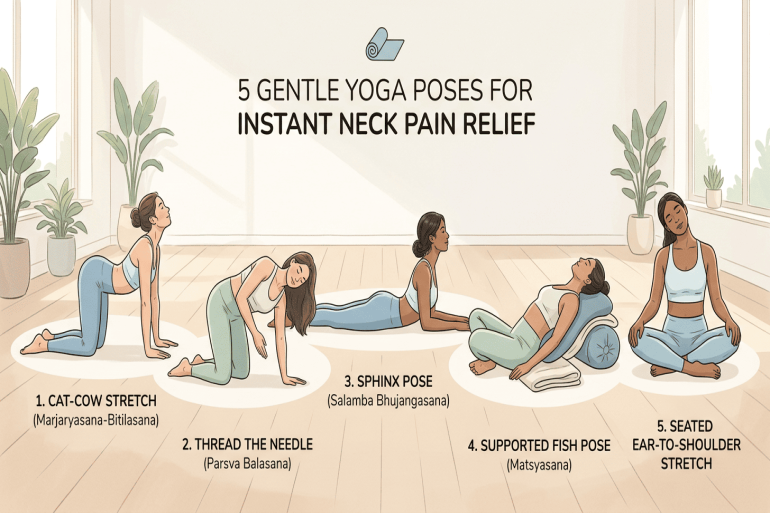
5 Gentle Yoga Poses for Instant Neck Pain Relief
We have all been there. After spending eight hours hunched over a laptop, driving through heavy traffic, or mindlessly scrolling through your phone, you feel it—that tight, dull, throbbing ache at the base of your neck.
In the modern digital age, chronic neck stiffness (often called "text neck") has become a silent epidemic. When we slouch, our head—which weighs about 10 to 12 pounds—exerts up to 60 pounds of pressure on the cervical spine. Over time, this leads to muscle imbalances, tight shoulders, and persistent pain.
While reaching for a painkiller provides a temporary fix, yoga offers a holistic approach to managing everyday muscle tension. By combining mindful stretching with deep breathing, yoga can help target areas of tightness in the neck, shoulders, chest, and upper back.
If you are interested in making yoga part of a broader wellness routine, you can also explore the benefits of yoga and meditation for relaxation and overall well-being.
Below is a step-by-step guide to five gentle yoga poses that may help relieve neck and upper-body tension.
Table of Contents
Understanding Neck Tension: Why Does It Happen?
The muscles in your neck and upper back—specifically the trapezius and levator scapulae—are constantly working to keep your head upright. When you slump forward, these muscles become overstretched and overworked, while the chest muscles become tight and short.
Long periods of sitting, poor posture, excessive screen time, and repetitive daily activities can all contribute to stiffness around the neck and shoulders. Making small changes to your daily routine can also help support better overall well-being. For more practical ideas, check out these simple lifestyle changes for a healthier life.
Yoga works by opening up the chest, lengthening the spine, and gently stretching the tight areas of the upper back to bring your body back into alignment.
5 Best Yoga Poses for Neck Pain Relief
Here are five beginner-friendly yoga poses that can help soothe an aching neck and release tension from the surrounding muscles.
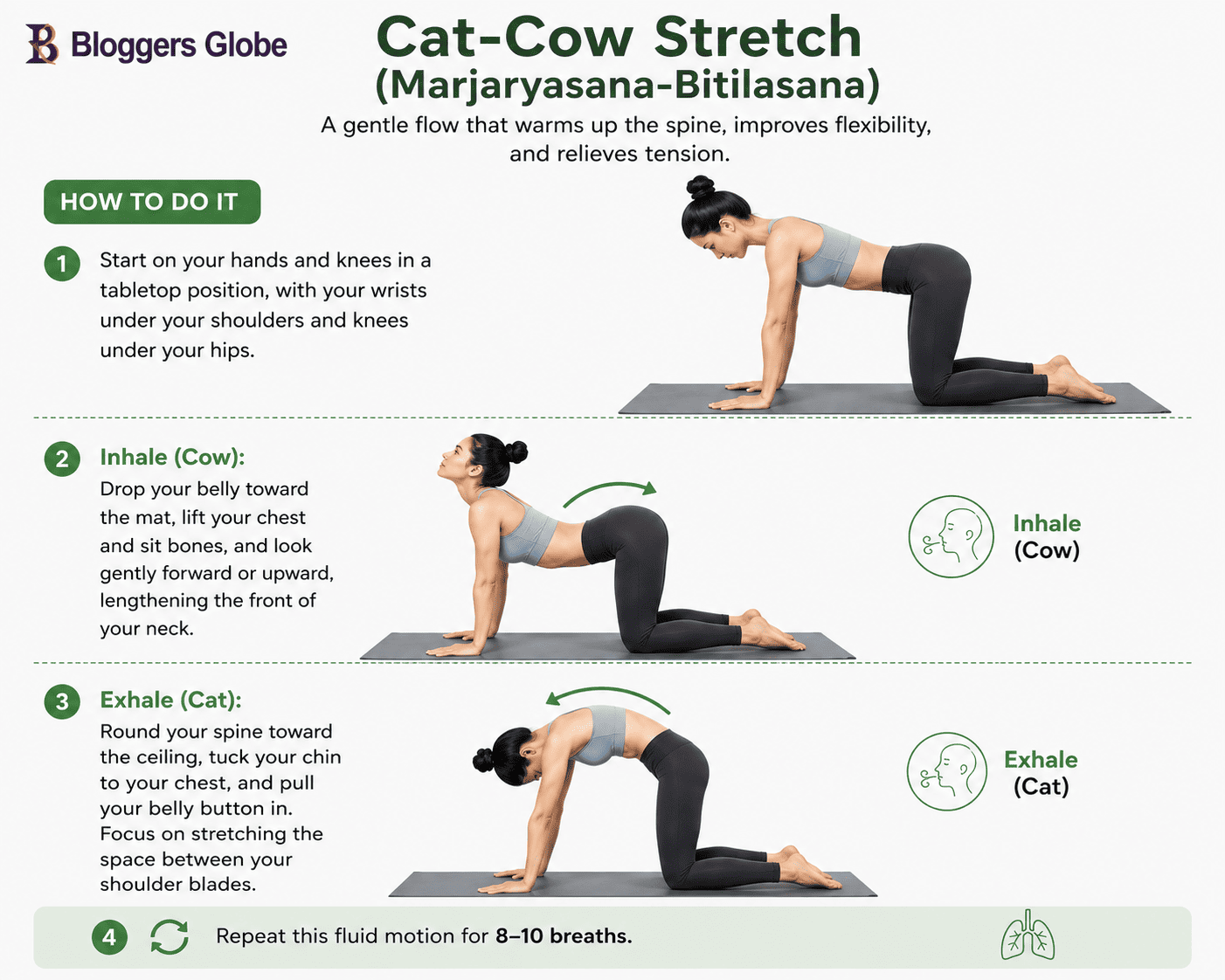
1. Cat-Cow Stretch (Marjaryasana-Bitilasana)
This gentle flow warms up the entire spine, coordinates breath with movement, and releases tension held in the neck and shoulders.
-
How to do it:
-
Start on your hands and knees in a tabletop position, with your wrists under your shoulders and knees under your hips.
-
Inhale (Cow): Drop your belly toward the mat, lift your chest and sit bones, and look gently forward or upward, lengthening the front of your neck.
-
Exhale (Cat): Round your spine toward the ceiling, tuck your chin to your chest, and pull your belly button in. Focus on stretching the space between your shoulder blades.
-
Repeat this fluid motion for 8–10 breaths.
-
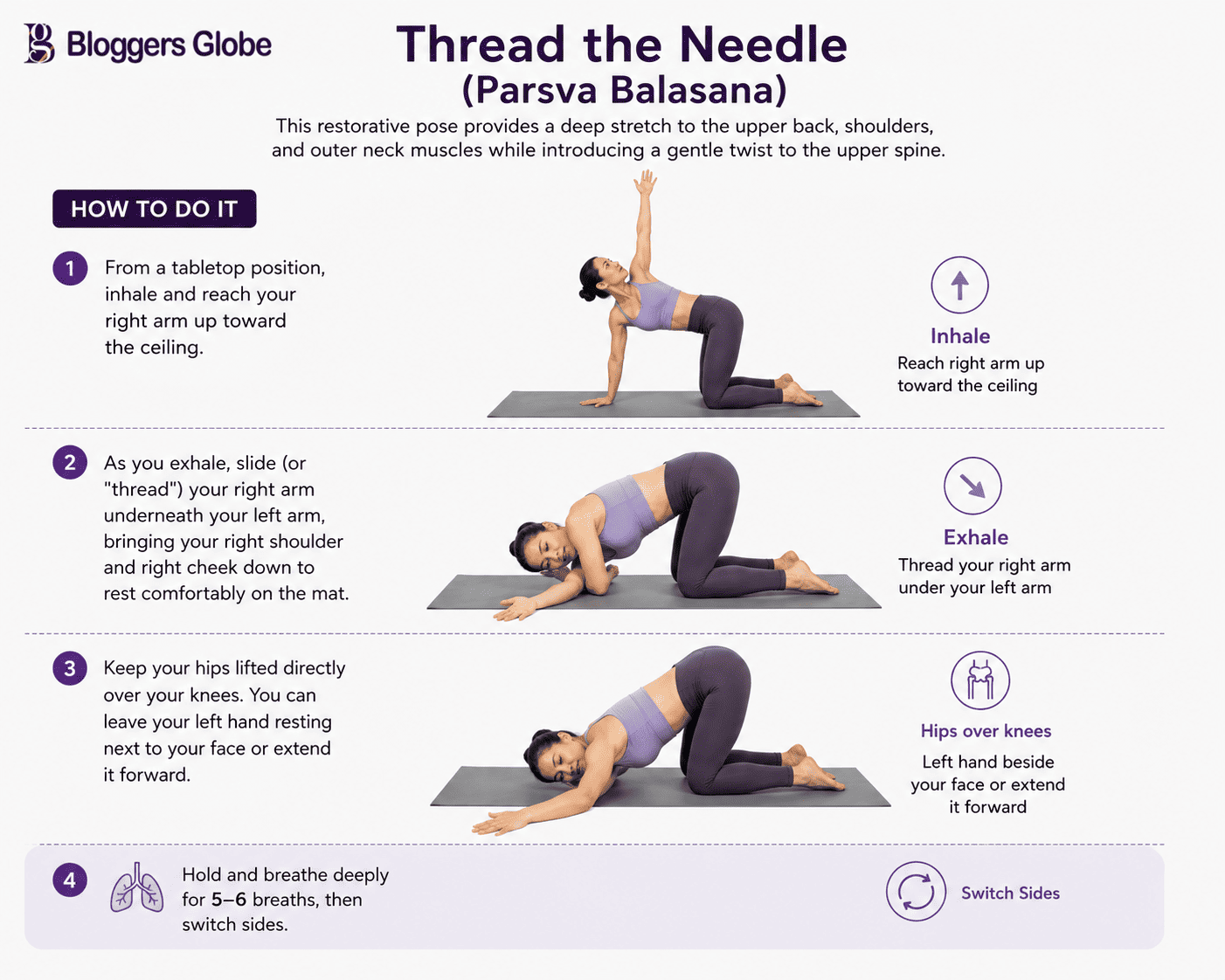
2. Thread the Needle (Parsva Balasana)
This restorative pose provides a deep stretch to the upper back, shoulders, and outer neck muscles while introducing a gentle twist to the upper spine.
-
How to do it:
-
From a tabletop position, inhale and reach your right arm up toward the ceiling.
-
As you exhale, slide (or "thread") your right arm underneath your left arm, bringing your right shoulder and right cheek down to rest comfortably on the mat.
-
Keep your hips lifted directly over your knees. You can leave your left hand resting next to your face or extend it forward.
-
Hold and breathe deeply for 5–6 breaths, then switch sides.
-
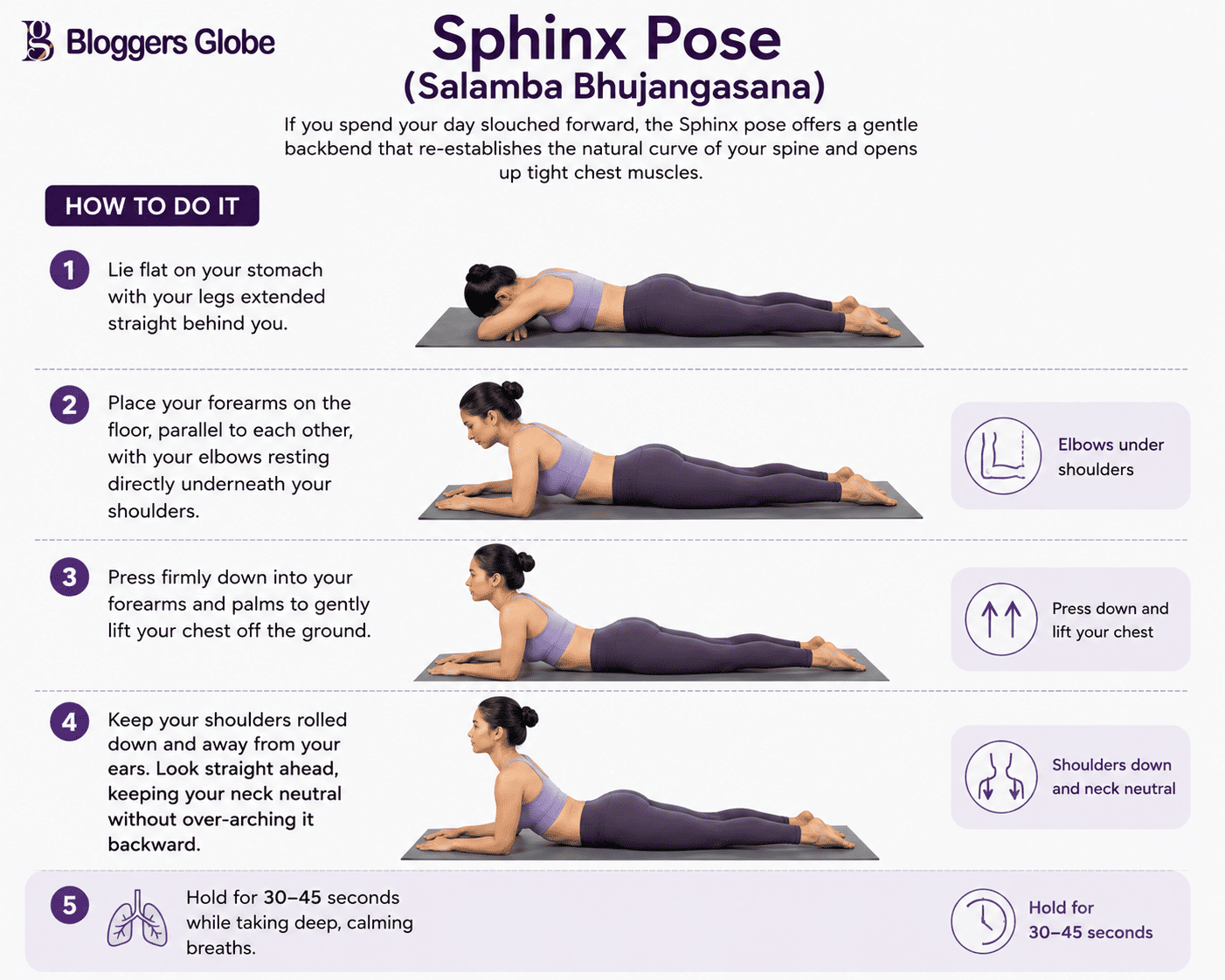
3. Sphinx Pose (Salamba Bhujangasana)
If you spend your day slouched forward, the Sphinx pose offers a gentle backbend that re-establishes the natural curve of your spine and opens up tight chest muscles.
-
How to do it:
-
Lie flat on your stomach with your legs extended straight behind you.
-
Place your forearms on the floor, parallel to each other, with your elbows resting directly underneath your shoulders.
-
Press firmly down into your forearms and palms to gently lift your chest off the ground.
-
Keep your shoulders rolled down and away from your ears. Look straight ahead, keeping your neck neutral without over-arching it backward.
-
Hold for 30–45 seconds while taking deep, calming breaths.
-
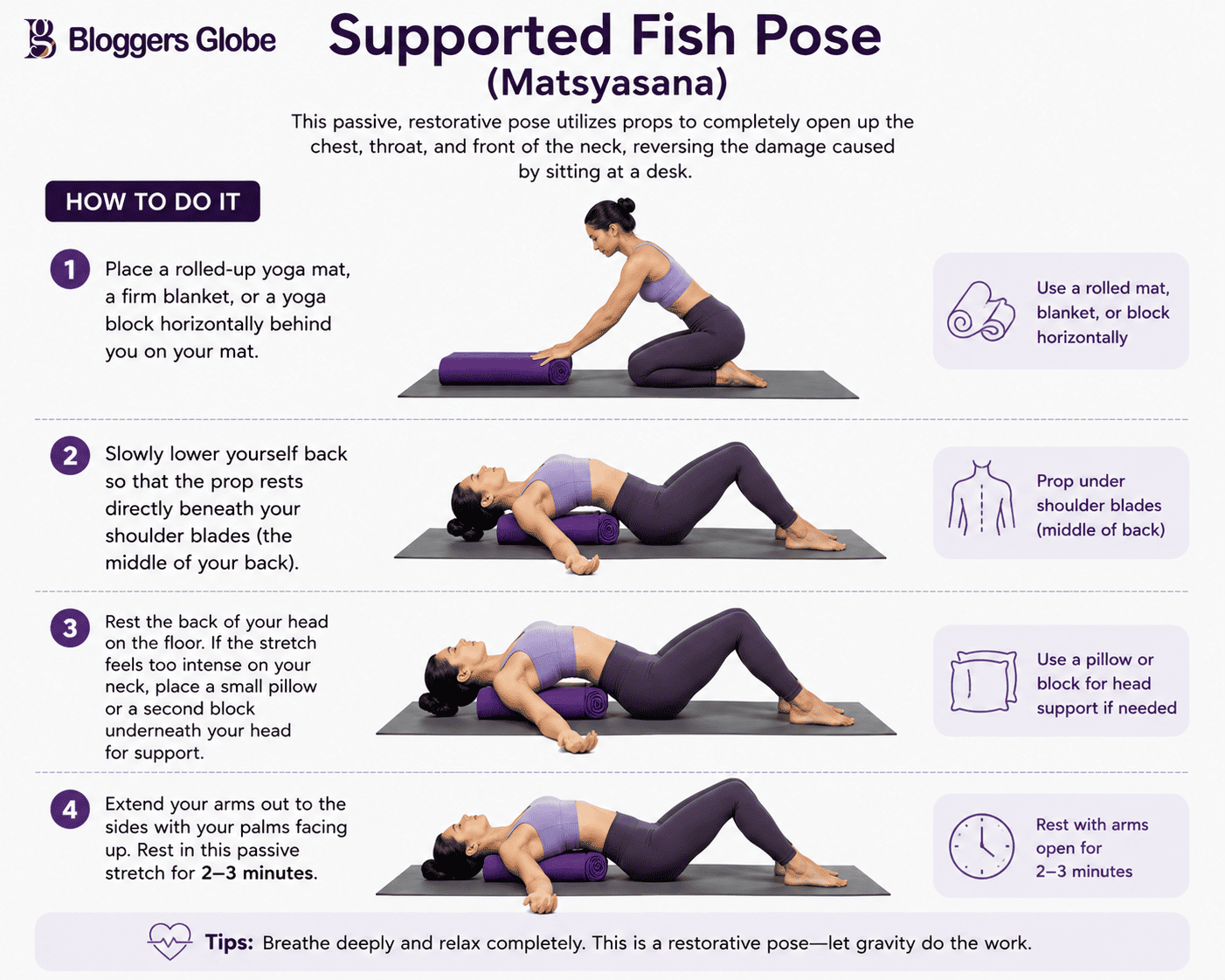
4. Supported Fish Pose (Matsyasana)
This passive, restorative pose utilizes props to gently open up the chest, throat, and front of the neck, making it useful for people who spend long periods sitting at a desk.
-
How to do it:
-
Place a rolled-up yoga mat, a firm blanket, or a yoga block horizontally behind you on your mat.
-
Slowly lower yourself back so that the prop rests directly beneath your shoulder blades (the middle of your back).
-
Rest the back of your head on the floor. If the stretch feels too intense on your neck, place a small pillow or a second block underneath your head for support.
-
Extend your arms out to the sides with your palms facing up. Rest in this passive stretch for 2–3 minutes.
-
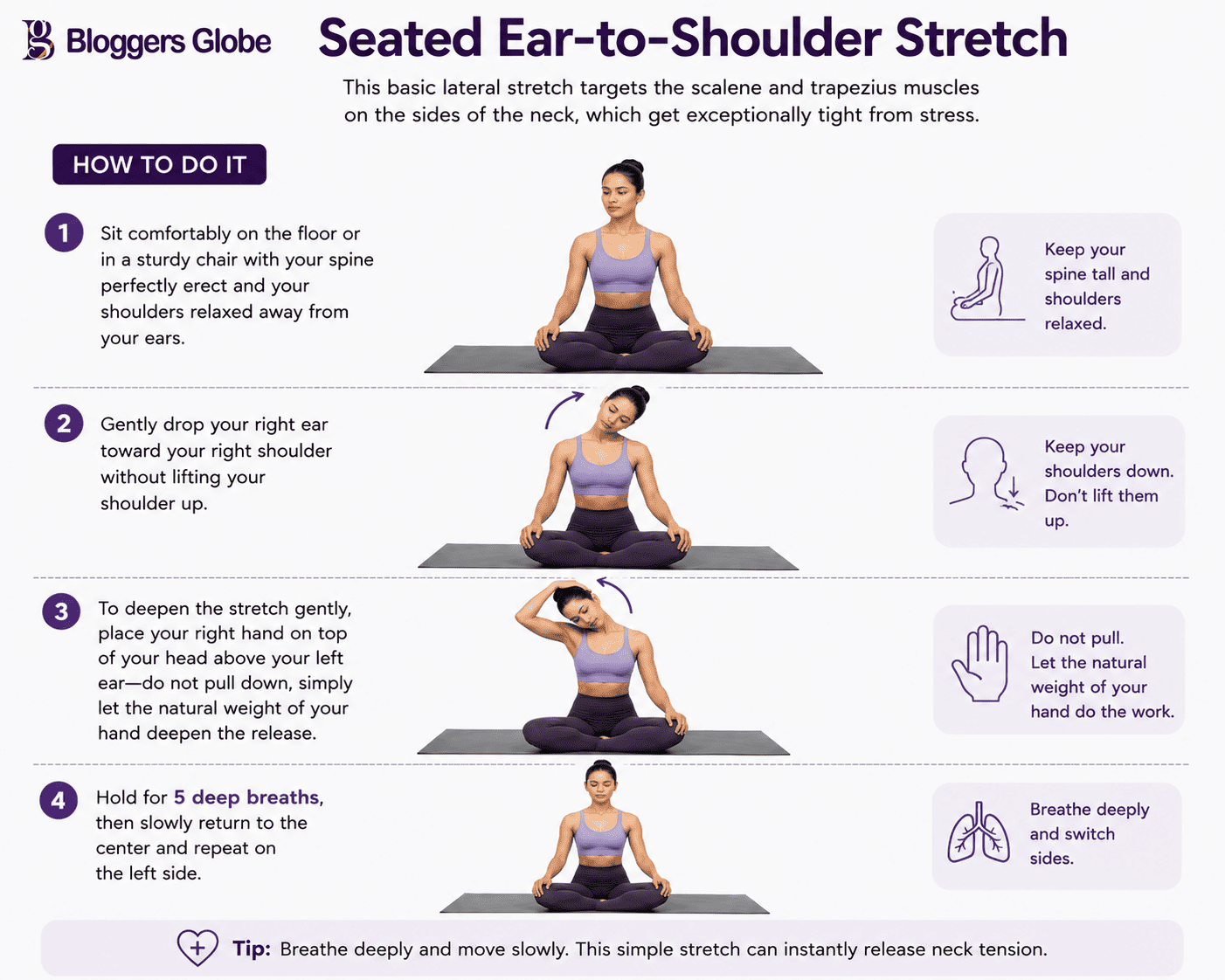
5. Seated Ear-to-Shoulder Stretch
This basic lateral stretch targets the scalene and trapezius muscles on the sides of the neck, which can become tight from prolonged sitting and everyday stress.
-
How to do it:
-
Sit comfortably on the floor or in a sturdy chair with your spine erect and your shoulders relaxed away from your ears.
-
Gently drop your right ear toward your right shoulder without lifting your shoulder up.
-
To deepen the stretch gently, place your right hand on top of your head above your left ear—do not pull down; simply let the natural weight of your hand deepen the release.
-
Hold for 5 deep breaths, then slowly return to the center and repeat on the left side.
-
If neck stiffness is accompanied by tension in the shoulders or upper back, you may also benefit from exploring these shoulder pain relief yoga poses as part of a gentle stretching routine.
Safety Tips and Precautions
-
Never Force or Strain: The cervical spine is delicate. Move slowly into every pose. If you feel any sharp pain, tingling, or numbness radiating down your arms, back out of the pose immediately.
-
Keep a Neutral Neck: During backbends (like Sphinx or Cobra), avoid throwing your head all the way back. Keep your gaze forward to protect your cervical spine.
-
Listen to Your Body: Stretches should feel like a satisfying release, not an intense struggle.
-
Start Gently: If you are new to yoga or have persistent neck discomfort, begin with simple movements and avoid forcing your range of motion.
Video Reference for Guided Practice
If you prefer visual and audio guidance to ensure your alignment is correct, practicing alongside a visual tutorial can be helpful.
Conclusion
Relieving everyday neck stiffness doesn't require hours of rigorous training. Dedicating just 10 to 15 minutes a day to gentle stretching and mindful movement can help break the cycle of posture-related stiffness and support a healthier daily routine.
These five poses—Cat-Cow, Thread the Needle, Sphinx Pose, Supported Fish Pose, and the Seated Ear-to-Shoulder Stretch—are simple options for gently moving the neck, shoulders, chest, and upper back.
However, yoga should not be used to push through severe or unexplained pain. If neck pain is persistent, worsening, or accompanied by numbness, weakness, or pain spreading into the arms, consider speaking with a qualified healthcare professional.
Your Turn: Which of these poses provided the most relief for your neck? Let us know in the comments below!