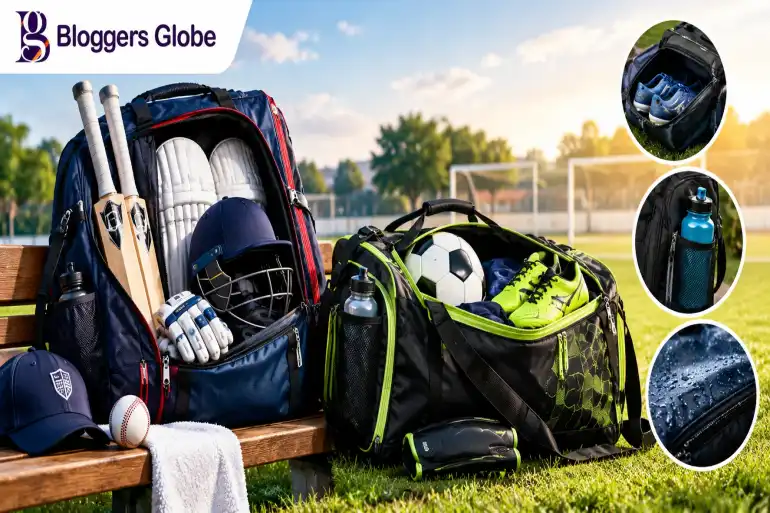
Best Sports Bags for Cricket and Football Players: Complete Buying Guide
Every cricket and football player needs a reliable sports bag to carry equipment, clothing, footwear and other match-day essentials. The right bag keeps your gear organised, protects it during travel and makes it easier to move between home, practice sessions, the gym and the playing field.
However, not every sports bag is suitable for every player. Cricketers often need space for protective equipment, gloves and footwear, while football players may prioritise room for boots, a ball, shin guards and training clothes. This guide explains how to choose the best sports bags for cricket and football players based on size, compartments, comfort, durability and budget.
Table of Contents
Why a Good Sports Bag Matters
A sports bag is more than a place to store your equipment. It helps keep essential items organised, reduces the chance of losing small accessories and makes carrying heavy gear more comfortable.
For cricket players, a suitable bag can accommodate items such as batting gloves, pads, a helmet, shoes and practice clothing. Football players may need separate spaces for boots, shin guards, socks, jerseys, water bottles and a football.
A well-designed bag can also separate clean clothes from sweaty equipment. This is particularly useful for players who travel to training sessions or play several matches each week.
Types of Sports Bags for Players
Duffle Sports Bags
Duffle bags are popular because they offer a large central compartment and are easy to carry. Many models include additional pockets for footwear, accessories and personal belongings.
They are a practical option for football players and cricketers who carry moderate amounts of equipment. Look for padded shoulder straps, sturdy handles and a wide opening that makes packing easier.
Cricket Kit Bags
Cricket kit bags are designed to carry bulky equipment, including pads, gloves, helmets and other protective gear. Larger models may have separate sections for bats, shoes and clothing.
Players who regularly travel with a complete kit should consider a spacious design with reinforced stitching and strong zippers. A bag that opens widely can make it easier to arrange and retrieve equipment.
Backpack-Style Sports Bags
Sports backpacks are suitable for students, casual players and people who carry only essential training gear. They distribute weight across both shoulders and are convenient for walking, cycling or using public transport.
Most backpacks cannot accommodate a complete cricket kit, but they can work well for football training when the player carries lightweight equipment and a separate ball.
Wheeled Sports Bags
Wheeled bags are useful for players who transport heavy equipment over longer distances. Instead of carrying the entire load on their shoulders, they can pull the bag along suitable surfaces.
Before buying one, check the wheel quality, handle strength and overall dimensions. Wheels may be less convenient on uneven grounds, stairs and muddy paths.
Features to Look for in a Cricket Bag
Cricket equipment can be bulky, especially for players who carry a complete set of protective gear. The best bag should offer enough capacity without becoming unnecessarily difficult to transport.
- Separate bat storage: Dedicated bat compartments or external bat sleeves help keep bats organised and accessible.
- Protective equipment space: Look for enough room for pads, gloves, a helmet and other items you regularly use.
- Footwear compartment: A separate shoe section helps prevent dirt from spreading to clothing and other equipment.
- Strong construction: Reinforced seams, durable fabric and reliable zippers are important for carrying heavier kits.
- Easy access: Wide openings and well-positioned pockets make it easier to find smaller items quickly.
Junior players and beginners may not need a professional-sized kit bag. Choose a capacity that matches the equipment you currently own, leaving some extra space for items you may add later.
Players who train regularly can also benefit from a consistent fitness routine. Read our guide on cricket fitness exercises used by professionals for ideas on building strength, mobility and endurance alongside technical practice.
Features to Look for in a Football Bag
Football players generally need a bag that can carry boots, a ball, shin guards, training clothes, socks and personal accessories. The ideal design depends on whether you play casually, train with a club or travel for competitions.
- Ventilated shoe compartment: A separate section helps isolate muddy boots and reduces contact with clean clothing.
- Ball storage: Some sports bags include an external mesh pocket or a dedicated compartment for a football.
- Clothing space: Choose a bag with enough room for a change of clothes, a towel and training essentials.
- Water-resistant material: A water-resistant exterior can help protect belongings from light rain and splashes.
- Comfortable straps: Padded shoulder straps and reinforced handles make regular travel easier.
If you carry your football separately, a medium-sized duffle or backpack may be sufficient. If you need to transport boots, a ball and additional clothing together, choose a larger design with dedicated storage sections.
Good footwear matters as much as good storage. Our guide to sports shoes for running and cricket explains the factors to consider when selecting footwear for different sporting activities.
Essential Factors Before Buying a Sports Bag
1. Size and Capacity
Start by listing everything you carry to a typical practice session. Consider equipment, footwear, clothes, towels, water bottles and personal items before selecting the bag size.
A small bag may be convenient but could force you to carry extra items separately. An oversized bag can be uncomfortable when only a few essentials are needed. Choose a size that suits your normal routine.
2. Material and Durability
Sports bags are commonly made from polyester, nylon and other synthetic fabrics. Nylon and high-quality polyester can offer a useful balance of weight, durability and ease of maintenance, depending on fabric thickness and construction.
Check the stitching, base panel, handles and zippers rather than judging quality by appearance alone. A reinforced bottom can be particularly useful when the bag is regularly placed on rough or damp ground.
3. Compartments and Organisation
Separate compartments make it easier to keep footwear, clothing and smaller accessories organised. Useful features include mesh pockets, internal organisers, bottle holders and ventilated sections.
Think about how you prefer to pack your gear. A bag with many small pockets may be useful for accessories, while a large central compartment may suit players carrying bulky equipment.
4. Comfort and Portability
Look for padded shoulder straps, comfortable handles and balanced weight distribution. If you frequently walk long distances, a backpack may be more comfortable than a single-strap duffle bag.
For heavy cricket kits, consider a wheeled model if your usual routes have smooth surfaces. Always check the bag's weight when empty, because a heavy design can become difficult to carry once fully packed.
5. Weather Resistance and Ventilation
Water-resistant fabric can help protect equipment from light rain, but it does not necessarily make a bag waterproof. If you regularly travel in wet weather, look for covered zippers, a protective base and a rain cover where available.
Ventilation is equally important for damp clothing and used footwear. Allow wet equipment to dry before storing it for long periods, even if the bag includes breathable compartments.
6. Budget and Value
The most expensive bag is not always the best choice. Compare capacity, material, stitching, comfort, warranty and compartment design within your budget.
Beginners may find a simple sports duffle sufficient, while competitive players carrying more equipment may benefit from a specialised kit bag. Choose useful features over unnecessary extras.
Which Sports Bag Is Best for You?
| Bag Type | Best For | Main Advantage | Possible Limitation |
|---|---|---|---|
| Cricket kit bag | Players carrying full cricket equipment | Large capacity and kit-specific storage | Can be bulky and heavy |
| Duffle sports bag | Football and general training | Flexible storage and easy packing | Organisation varies by model |
| Sports backpack | Students and casual players | Comfortable hands-free carrying | Limited space for bulky kits |
| Wheeled kit bag | Players carrying heavy equipment | Reduces the need to carry the full load | Less convenient on rough terrain |
For a cricketer with a full set of protective gear, a cricket-specific kit bag is usually the most practical starting point. For a football player who carries boots, clothes and accessories, a duffle bag with a ventilated shoe compartment may be a better fit.
Players who train across different sports should prioritise adaptable storage, durable materials and comfortable carrying options. If you also use resistance equipment during training, our article on fitness bands for athletes offers more information about a useful training accessory.
Common Buying Mistakes to Avoid
Avoid choosing a sports bag based only on its colour, brand name or advertised capacity. A bag may look spacious but still lack the compartments required for your equipment.
- Buying the wrong size: Check whether your complete kit fits before committing to a bag.
- Ignoring strap quality: Thin straps and weak handles may become uncomfortable under heavy loads.
- Overlooking ventilation: Damp boots and sweaty clothing need suitable storage and regular drying.
- Assuming water resistance means waterproofing: Check the manufacturer's specifications and limitations.
- Paying for unused features: Choose features that match your sport and travel habits.
- Ignoring cleaning requirements: Removable or easy-to-clean sections can simplify maintenance.
How to Maintain Your Sports Bag
Regular care can help extend the useful life of your sports bag. Empty it after training, remove dirt and grass, and allow damp compartments to air-dry before storing the bag.
Clean the exterior according to the manufacturer's instructions. Avoid harsh cleaning products unless they are specifically approved for the material, and check zippers and seams regularly for signs of wear.
Keep sharp objects and dirty footwear away from delicate clothing where possible. Do not overload the bag beyond its recommended capacity, as excess weight can strain handles, seams and zippers.
Frequently Asked Questions
What is the best type of bag for cricket players?
A cricket kit bag is usually the most practical choice for players carrying bats, pads, gloves, helmets and shoes. Beginners with limited equipment may prefer a smaller kit bag or a spacious duffle.
Can football players use a regular gym bag?
Yes. A regular gym bag can work well if it has enough space for boots, clothing and accessories. A separate ventilated shoe compartment is especially useful for keeping muddy footwear away from clean items.
What size sports bag should I buy?
The ideal size depends on the equipment you carry. Make a list of your essentials and check the bag's dimensions and compartment layout before buying it.
Are waterproof sports bags necessary?
Not for every player. Water-resistant bags are often sufficient for everyday use, but players who regularly travel in heavy rain may prefer stronger weather protection. Always check whether the bag is water-resistant or fully waterproof.
How can I prevent bad smells inside my sports bag?
Remove sweaty clothes and used footwear after every session, clean the bag regularly and let all compartments dry completely. Avoid leaving damp equipment inside a closed bag overnight.
Final Thoughts
The best sports bags for cricket and football players combine suitable capacity, durable construction, comfortable carrying and practical organisation. Cricket players should focus on space for protective equipment and bats, while football players should look for convenient boot storage, room for clothing and easy access to essentials.
Before buying, compare the bag's dimensions, compartments, material, weight and price. A well-chosen sports bag can make training days easier, protect your equipment during travel and keep your sporting essentials organised season after season.