Shoulder Pain Relief Yoga: 10 Best Yoga Poses to Reduce Shoulder Pain Naturally
Shoulder pain is one of the most common problems affecting people of all ages. Whether you spend long hours working on a computer, frequently use your smartphone, lift heavy objects, or have poor posture, shoulder stiffness and discomfort can interfere with your daily activities.
Fortunately, yoga offers a natural and effective way to improve shoulder mobility, reduce muscle tension, and strengthen the muscles surrounding the shoulder joint. Practicing the right yoga poses regularly can help relieve pain, improve posture, and prevent future injuries.
In this guide, you'll learn the best yoga poses for shoulder pain relief, how to perform them safely, their benefits, and important precautions.
Table of Contents
Common Causes of Shoulder Pain
Shoulder pain can develop due to several reasons, including:
- Poor posture while sitting
- Long hours using a laptop or mobile phone
- Muscle strain
- Frozen shoulder
- Rotator cuff injuries
- Heavy lifting
- Sports injuries
- Arthritis
- Stress-related muscle tightness
Spending long hours looking down at a phone or sitting at a desk can also contribute to tension around the neck and upper shoulders. Taking regular movement breaks and improving your daily habits can make a difference. For more practical wellness habits, see these simple lifestyle changes for a healthier life.
Identifying the underlying cause is important. If your pain is severe, persistent, or follows an injury, consult a healthcare professional before starting yoga.
Benefits of Yoga for Shoulder Pain
Regular yoga practice can help:
- Improve shoulder flexibility
- Strengthen shoulder muscles
- Reduce stiffness
- Improve posture
- Increase blood circulation
- Relieve neck and upper back tension
- Reduce stress
- Improve overall mobility
Yoga can also support relaxation and stress management. Combining gentle movement with controlled breathing may help you feel less tense after a long day. You can also learn more about the broader benefits of yoga and meditation for overall physical and mental well-being.
How to Do Shoulder Pain Relief Yoga
Before beginning:
- Warm up your shoulders with gentle shoulder rolls.
- Practice slow, controlled breathing.
- Move gently without forcing any stretch.
- Hold each pose for 20–40 seconds.
- Repeat each pose 2–3 times.
If you spend most of your day sitting, include short movement breaks throughout your routine instead of relying only on one yoga session. Gentle stretching can be particularly useful when stiffness is related to prolonged sitting or poor posture.
Stop immediately if you experience sharp or worsening pain.
10 Best Yoga Poses for Shoulder Pain
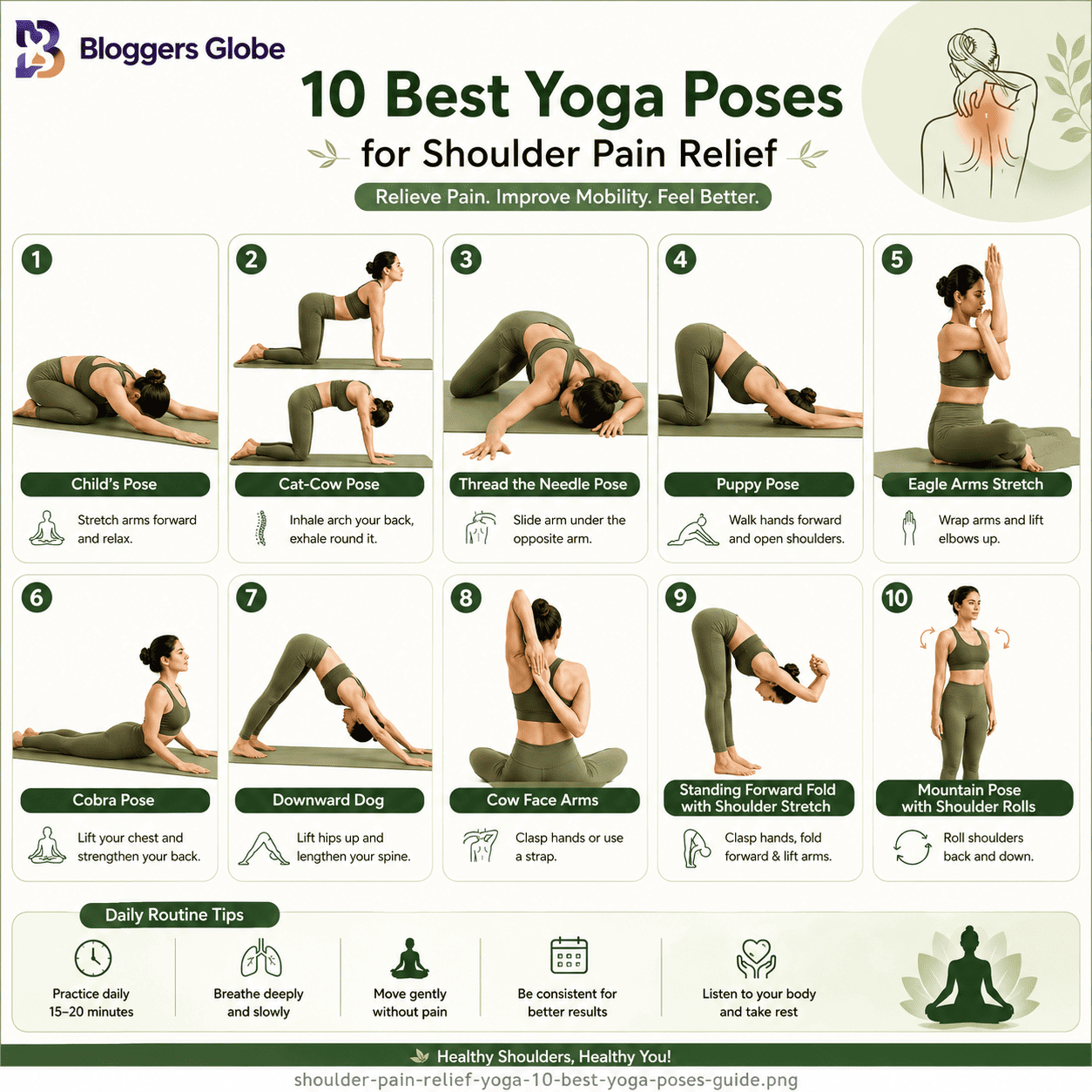
1. Child's Pose (Balasana)
How to do:
- Kneel on the floor.
- Sit back on your heels.
- Stretch your arms forward.
- Rest your forehead on the mat.
- Breathe deeply for 30 seconds.
Benefits
- Relaxes shoulders
- Reduces upper back tension
Keep your shoulders relaxed and avoid forcing your arms forward. If the position feels uncomfortable, bring your arms closer to your body.
2. Cat-Cow Pose
How to do:
- Begin on hands and knees.
- Inhale and arch your back.
- Exhale and round your spine.
- Repeat for 10 slow breaths.
Benefits
- Improves spinal mobility
- Loosens shoulder muscles
Move slowly and coordinate each movement with your breathing. Keep your neck relaxed instead of forcing your head into either direction.
3. Thread the Needle Pose
How to do:
- Start on all fours.
- Slide one arm under the opposite arm.
- Rest your shoulder on the floor.
- Hold for 30 seconds and switch sides.
Benefits
- Deep shoulder stretch
- Reduces stiffness
Thread the Needle is particularly useful for gently stretching the upper back and rear shoulder area. Do not force the shoulder toward the floor.
4. Puppy Pose
How to do:
- From tabletop, walk your hands forward.
- Lower your chest toward the floor.
- Keep hips above knees.
Benefits
- Opens shoulders
- Improves flexibility
Keep the stretch comfortable and avoid pushing your chest down aggressively. You can shorten the distance between your hands and knees if your shoulders feel tight.
5. Eagle Arms Stretch
How to do:
- Wrap one arm over the other.
- Press palms together if possible.
- Lift elbows gently.
Benefits
- Stretches upper back
- Relieves shoulder tightness
If your palms cannot touch, simply bring your forearms toward each other. The stretch should remain gentle and controlled.
6. Cobra Pose
How to do:
- Lie on your stomach.
- Place palms beneath shoulders.
- Lift your chest gently.
Benefits
- Strengthens upper back
- Improves posture
Cobra Pose can also be included in a broader yoga routine focused on back mobility. If you experience upper or lower back discomfort, explore these yoga asanas for back pain relief.
7. Downward-Facing Dog
How to do:
- Lift hips upward.
- Straighten your arms and legs as comfortable.
- Press your chest toward your thighs.
Benefits
- Strengthens shoulders
- Improves flexibility
Keep your shoulders away from your ears and bend your knees slightly if needed. Focus on maintaining a stable, comfortable position rather than trying to achieve a perfect shape.
8. Cow Face Arms (Gomukhasana Arms)
How to do:
- Raise one arm overhead.
- Reach the other arm behind your back.
- Clasp hands or use a strap.
Benefits
- Excellent shoulder mobility
- Improves range of motion
If your hands do not meet comfortably, use a strap or towel between them. Never pull aggressively to force your hands together.
9. Standing Forward Fold with Shoulder Stretch
How to do:
- Clasp your hands behind your back.
- Fold forward gently.
- Lift your arms overhead as comfortable.
Benefits
- Opens chest
- Relieves shoulder tension
Keep a slight bend in your knees if necessary. Avoid forcing your arms overhead if you have limited shoulder mobility.
10. Mountain Pose with Shoulder Rolls
How to do:
- Stand tall.
- Roll shoulders backward and downward.
- Repeat slowly for one minute.
Benefits
- Improves posture
- Relieves stiffness
Shoulder rolls are easy to perform during short breaks from work and can help you become more aware of your posture throughout the day.
Daily Yoga Routine
Practice this routine in 15–20 minutes:
- Warm-up – 3 minutes
- Child's Pose – 1 minute
- Cat-Cow – 2 minutes
- Thread the Needle – 2 minutes
- Puppy Pose – 2 minutes
- Cobra Pose – 2 minutes
- Downward Dog – 2 minutes
- Eagle Arms – 2 minutes
- Shoulder Rolls – 2 minutes
- Deep Breathing – 2 minutes
Consistency is key. Practicing this routine 4–5 times a week can help improve shoulder mobility over time.
If you want to expand your yoga practice beyond shoulder mobility, you can add poses that work other areas of the body, such as Setubandhasana, or Bridge Pose.
Precautions
- Avoid overstretching.
- Never force a painful movement.
- Practice slowly.
- Maintain steady breathing.
- Consult your doctor if you have a recent shoulder injury, fracture, or severe pain.
People with an existing shoulder condition should be particularly careful with poses that put weight through the arms or require a large range of motion. If a movement causes sharp pain, numbness, tingling, or worsening symptoms, stop the exercise and seek appropriate medical advice.
Watch Video Tutorial
Watching a guided session can help ensure proper form and technique.
Recommended YouTube video:
Frequently Asked Questions
Can yoga cure shoulder pain?
Yoga can help reduce muscle tension, improve flexibility, and strengthen supporting muscles. However, it is not a substitute for medical treatment for serious injuries or conditions.
How often should I practice?
Aim for 15–20 minutes, 4–5 days a week for the best results. Start gently and adjust your routine based on how your body responds.
Is yoga safe for frozen shoulder?
Gentle yoga may help improve mobility, but consult a healthcare professional or physiotherapist before starting if you have frozen shoulder or severe pain.
Which yoga pose is best for shoulder stiffness?
Thread the Needle, Puppy Pose, and Cow Face Arms are among the most useful stretches for improving shoulder mobility. However, the best choice depends on the cause and severity of your stiffness.
Can yoga help with neck and shoulder tension?
Gentle yoga may help release tension around the neck, shoulders, and upper back, particularly when stiffness is associated with posture or prolonged sitting. For a separate routine focused on the neck, see these gentle yoga poses for neck pain relief.
Final Thoughts
Shoulder pain can significantly affect your daily life, but regular yoga practice offers a simple and natural way to improve flexibility, reduce stiffness, and strengthen the muscles that support your shoulders. By incorporating these poses into your routine and maintaining good posture throughout the day, you can promote long-term shoulder health.
Start slowly, listen to your body, and stay consistent. If your pain persists, worsens, or is caused by an injury, seek advice from a qualified healthcare professional. With patience and regular practice, shoulder pain relief yoga can become an effective part of your overall wellness routine.
A balanced approach that combines regular movement, healthy daily habits, adequate rest, and stress management can support your overall well-being while you work on improving shoulder mobility.