Traditional Indian Foods That Are Actually Healthy
In today's world, healthy eating has become a major topic of discussion. Social media is full of diet trends, imported superfoods, expensive supplements, and complicated meal plans. Many people believe that staying healthy means spending more money or following strict diets.
But the truth is much simpler.
Our grandparents were eating healthy long before the words "superfood" and "clean eating" became popular. Traditional Indian cuisine contains many nutritious foods that have been part of our culture for centuries. These foods are affordable, easily available, and packed with nutrients that support a healthy lifestyle.
The problem is that many of us have moved away from these traditional foods and replaced them with processed snacks, sugary drinks, and fast food.
In this article, let's explore some traditional Indian foods that are actually healthy and deserve a place on your plate.
Table of Contents
Why Traditional Indian Foods Are Healthy
Traditional Indian foods were developed over generations. They were designed around local ingredients, seasonal availability, and balanced nutrition.
Many traditional meals naturally include:
-
Protein from lentils and legumes
-
Fiber from vegetables and grains
-
Healthy fats from nuts and seeds
-
Probiotics from fermented foods
-
Vitamins and minerals from fresh ingredients
Unlike highly processed foods, traditional Indian dishes are usually made with simple ingredients and minimal artificial additives.
Fiber is particularly important for digestive health, and foods such as lentils, sprouts, vegetables, and whole grains can help increase daily fiber intake. For more ideas, check out our guide to high-fiber foods for better digestion.
Let's look at some of the healthiest options.
1. Khichdi – The Ultimate Comfort Food
Khichdi is one of the simplest yet healthiest Indian meals.
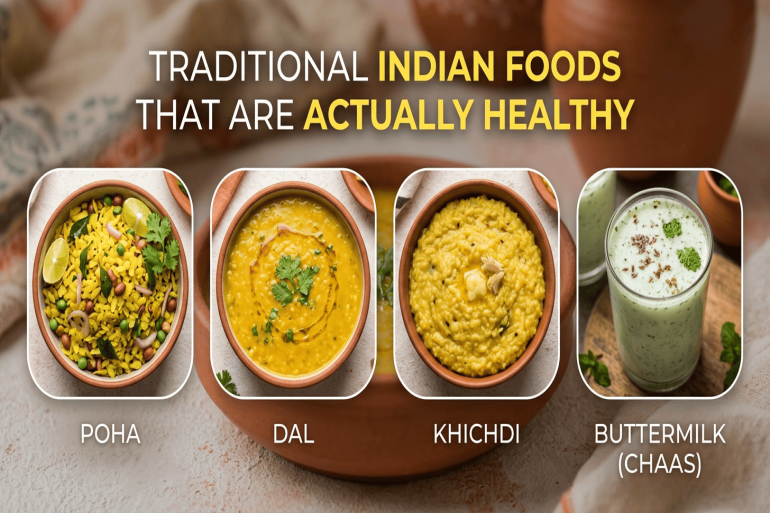
Made with rice and lentils, khichdi is easy to digest and provides a good balance of carbohydrates and protein. Many people choose it when they want a light, comforting meal that is gentle on the stomach.
Adding vegetables like carrots, peas, beans, and spinach can make it even more nutritious.
Health Benefits of Khichdi
-
Easy to digest
-
Good source of protein
-
Provides long-lasting energy
-
Supports a balanced diet
-
Suitable for many age groups
Khichdi proves that healthy food does not have to be complicated.
2. Sattu – Bihar's Protein Powerhouse
Sattu is made from roasted gram (chickpeas) and has been a staple food in Bihar and parts of Uttar Pradesh for generations.
Today, fitness enthusiasts are discovering what traditional Indian kitchens have known for years—sattu is nutritious, filling, affordable, and easy to prepare.
You can consume it as a drink, use it in parathas, or mix it with vegetables.
Health Benefits of Sattu
-
Rich in plant-based protein
-
High in fiber
-
Helps keep you full
-
Provides useful nutrients and energy
-
Budget-friendly and easily available
A glass of sattu drink can be a refreshing alternative to sugary beverages.
If you're also looking for convenient protein-rich options between meals, you can explore these low-carb, high-protein snacks for more ideas.
3. Curd (Dahi) – Nature's Probiotic
Curd is a common part of Indian meals, but many people underestimate its nutritional value.
It contains beneficial bacteria that can support digestion and gut health. A healthy diet that includes fermented foods such as curd can be a useful part of an overall balanced eating pattern.
Health Benefits of Curd
-
Supports healthy digestion
-
Rich in calcium
-
Provides protein
-
Can be included in many meals
-
Works well as raita or a side dish
Whether eaten plain, with rice, or as raita, curd is one of the most versatile foods in Indian cuisine.
4. Sprouts – Small but Powerful
Sprouts may look simple, but they are packed with nutrients.
When beans or lentils are sprouted, their nutritional profile changes and they become a convenient addition to meals and snacks.
Common sprouts include:
-
Moong sprouts
-
Chana sprouts
-
Moth bean sprouts
Health Benefits of Sprouts
-
Provides plant-based protein
-
Rich in fiber
-
Supports a balanced diet
-
Can be added to salads and chaats
-
Provides useful vitamins and minerals
A bowl of sprouts chaat can be a nutritious snack or breakfast option.
5. Millets – The Forgotten Super Grains
Long before refined grains became common, many Indian households regularly consumed millets.
Popular millets include:
-
Bajra
-
Jowar
-
Ragi
-
Foxtail millet
Today, millets are making a comeback because of their impressive nutritional profile.
Health Benefits of Millets
-
Rich in fiber
-
Naturally gluten-free
-
Provides important nutrients
-
Can help make meals more filling
-
Useful alternative to some refined grain products
Millet rotis can be a nutritious alternative to refined flour products when included as part of a balanced diet.
6. Dal – India's Everyday Protein Source
Dal is one of the most common foods in Indian homes.
Whether it is moong dal, masoor dal, toor dal, or urad dal, each variety provides important nutrients and plant-based protein.
Vegetarians especially benefit from including dal and other legumes regularly as part of a varied diet.
Health Benefits of Dal
-
Good source of plant-based protein
-
Rich in fiber
-
Provides important micronutrients
-
Helps make meals more filling
-
Budget-friendly nutrition
A simple bowl of dal and rice remains one of the most practical traditional Indian meals.
For people who exercise regularly, combining nutritious meals with appropriate protein intake can also support an active lifestyle. Our guide to foods to eat before and after a workout covers more ways to plan meals around exercise.
7. Poha – A Light and Nutritious Breakfast
Many people think poha is just a light snack, but it can be a nutritious breakfast when prepared properly.
Adding peanuts, vegetables, and sprouts increases its nutritional value significantly.
Health Benefits of Poha
-
Easy to digest
-
Provides carbohydrates for energy
-
Can be enriched with protein-rich ingredients
-
Can provide iron
-
Easy to customize with vegetables
Poha remains one of the most popular breakfast choices across India for good reason.
8. Buttermilk (Chaas) – The Summer Health Drink
Before packaged soft drinks became common, Indians often drank chaas after meals.
Made from curd and water, buttermilk is refreshing and can be a lighter alternative to many sugary beverages.
Health Benefits of Chaas
-
Supports hydration
-
Contains nutrients from curd
-
Refreshing during hot weather
-
Can complement a balanced meal
-
Generally lower in calories than many sugary drinks
A glass of chaas can be a healthier choice than sugary soft drinks, especially when little or no added sugar is used.
For more refreshing options, see our guide to healthy summer drinks to stay hydrated.
9. Homemade Pickles in Moderation
Pickles are often seen as unhealthy because of their salt and oil content, but traditional homemade pickles can still have a place in a balanced diet when consumed in moderation.
Many pickles are made using ingredients such as:
-
Mango
-
Lemon
-
Garlic
-
Amla
These ingredients can provide vitamins, plant compounds, and flavor.
The key is moderation. Pickles can be high in sodium, so small portions are generally a better choice than consuming large amounts regularly.
Why Home-Cooked Indian Food Wins
One of the biggest advantages of traditional Indian food is that it is usually cooked fresh at home.
Home-cooked meals make it easier to control the ingredients, portion sizes, cooking methods, and amount of added salt, sugar, and oil.
Home-cooked meals often contain:
-
Fewer ultra-processed ingredients
-
Less added sugar when prepared appropriately
-
Better control over ingredients
-
More vegetables and legumes
-
Balanced nutrition
Many people can improve their everyday diet simply by cooking more meals at home and choosing minimally processed ingredients.
A healthy diet is only one part of overall wellness. Regular movement, adequate sleep, hydration, and stress management also matter. For practical everyday habits, see these simple lifestyle changes for a healthier life.
If you're trying to stay active, combining nutritious food with regular exercise can make your routine more sustainable. You can also compare yoga and gym workouts for weight loss and fitness to find an approach that suits your goals.
Final Thoughts
Healthy eating does not always require expensive ingredients or imported superfoods. Many nutritious foods are already part of India's rich culinary tradition.
Foods like khichdi, sattu, curd, sprouts, millets, dal, poha, and chaas have nourished generations of Indians. They are affordable, versatile, and easy to include in daily meals.
The next time you think about improving your diet, look beyond trendy food products and remember the wisdom of traditional Indian kitchens.
Choosing more whole and minimally processed foods, eating a variety of vegetables and legumes, and paying attention to portion sizes can make traditional meals an important part of a balanced lifestyle.
Sometimes the healthiest foods are the ones our grandparents have been recommending all along.
Which traditional Indian food is your favorite? Let us know in the comments and share how you include it in your daily diet!