
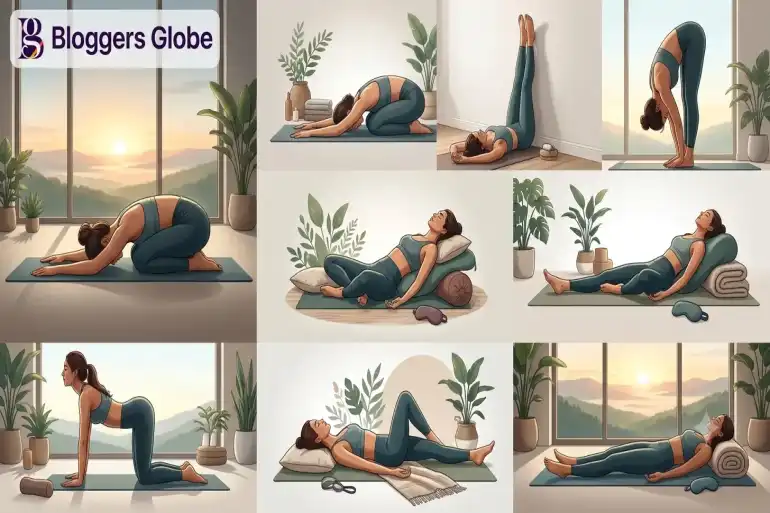
Best Yoga Poses for Better Sleep: 7 Bedtime Yoga Poses to Relax
Getting enough quality sleep is important for your physical and mental well-being, but stress, screen time, busy schedules, and an overactive mind can make it difficult to fall asleep at night. If you often lie in bed feeling tired but unable to relax, a few gentle yoga poses before bedtime may help create a calmer transition into sleep.
Yoga combines gentle movement, stretching, breathing, and relaxation. A slow bedtime routine can help you release everyday tension and prepare your body and mind for rest. If you are building a healthier daily routine, you can also explore these simple lifestyle changes for a healthier life.
Table of Contents
-
7 Best Yoga Poses for Better Sleep
Can Yoga Help You Sleep Better?
A gentle yoga practice before bed may help you relax after a busy day. Slow movements and controlled breathing can shift your attention away from work, social media, and other daily distractions.
Yoga should not be viewed as a guaranteed treatment for insomnia or other sleep disorders. However, making relaxation part of your evening routine can support better sleep habits and help you create a consistent transition from daytime activity to bedtime.
Stress management is also an important part of a healthy lifestyle. You can learn more about the connection between relaxation and wellness in this guide to the benefits of yoga and meditation.
7 Best Yoga Poses for Better Sleep
The best bedtime yoga poses are generally gentle, comfortable, and easy to perform without creating too much physical stimulation. The following poses can be practiced individually or combined into a short evening routine.
1. Child's Pose (Balasana)
Child's Pose is one of the simplest relaxing yoga poses for beginners. It gently stretches the back, hips, and thighs while giving you an opportunity to slow down your breathing.
This pose can be particularly useful at the end of the day when your body feels tired or tense.
How to do Child's Pose
- Kneel on a comfortable yoga mat.
- Bring your big toes together and allow your knees to move apart comfortably.
- Slowly sit your hips back toward your heels.
- Lower your upper body toward the mat.
- Rest your forehead on the mat or on a cushion if necessary.
- Keep your arms relaxed and breathe slowly.
- Stay in the position for around 30 seconds to 2 minutes.
Do not force your hips, knees, or back into a deeper position. Use a pillow or folded blanket for additional support if needed.
2. Legs-Up-the-Wall Pose (Viparita Karani)
Legs-Up-the-Wall Pose is a gentle restorative posture that is easy to include in a bedtime routine. It involves lying on your back while resting your legs against a wall or another stable vertical surface.
How to do Legs-Up-the-Wall Pose
- Sit sideways next to a clear wall.
- Gently lie back while bringing your legs up against the wall.
- Allow your arms to rest comfortably beside your body.
- Close your eyes and take slow, comfortable breaths.
- Stay in the pose for a few minutes if it feels comfortable.
If your lower back feels uncomfortable, move slightly farther away from the wall or place a small cushion under your head.
3. Standing Forward Fold (Uttanasana)
Standing Forward Fold provides a gentle stretch through the back of the legs and back. When practiced slowly, it can become a useful part of a relaxing evening yoga sequence.
How to do Standing Forward Fold
- Stand comfortably with your feet about hip-width apart.
- Take a slow breath in.
- As you breathe out, bend forward from your hips.
- Allow your head and neck to relax.
- Bend your knees slightly if your hamstrings feel tight.
- Take several slow breaths before slowly returning to standing.
Never force yourself to touch the floor. A comfortable stretch is more important than reaching a particular position.
4. Reclining Butterfly Pose (Supta Baddha Konasana)
Reclining Butterfly Pose is a gentle floor-based posture that can be particularly suitable for winding down before sleep. It opens the hips while allowing the rest of the body to remain supported.
How to do Reclining Butterfly Pose
- Lie comfortably on your back.
- Bend your knees and bring the soles of your feet together.
- Allow your knees to move gently toward the sides.
- Place your arms comfortably beside your body.
- Close your eyes and breathe slowly.
- Stay in the position for 1–3 minutes or as long as it remains comfortable.
Place cushions underneath your knees if your hips feel tight or uncomfortable.
5. Cat-Cow Stretch (Marjaryasana-Bitilasana)
Cat-Cow is a gentle movement sequence that can help release stiffness around the spine, shoulders, and neck. It is useful if you have spent much of the day sitting at a desk or looking at a phone.
For more gentle movements targeting upper-body tension, you can also read our guide to gentle yoga poses for neck pain relief.
How to do Cat-Cow
- Start on your hands and knees with your wrists below your shoulders.
- Keep your knees underneath your hips.
- Inhale and gently lift your chest while allowing your spine to curve naturally.
- Exhale and slowly round your spine toward the ceiling.
- Move slowly and coordinate each movement with your breathing.
- Repeat for 5–10 comfortable cycles.
Keep the movement gentle. The goal before bed is relaxation rather than an intense stretching session.
6. Supine Spinal Twist
A gentle lying spinal twist can be a comfortable way to finish the movement portion of your bedtime yoga routine. It involves rotating the lower body while keeping the upper body relaxed.
How to do a Supine Spinal Twist
- Lie on your back with your legs extended.
- Bend your right knee and bring it toward your chest.
- Gently guide the right knee across your body toward the left side.
- Keep both shoulders as relaxed as possible.
- Turn your head only if it feels comfortable.
- Hold for several slow breaths.
- Return to the center and repeat on the opposite side.
Do not force the twist. Keep the movement within a comfortable range.
7. Savasana (Corpse Pose)
Savasana is one of the best poses to finish a bedtime yoga routine. Unlike more active yoga postures, the focus is simply on lying comfortably, relaxing the body, and breathing naturally.
How to do Savasana
- Lie flat on your back on a comfortable surface.
- Let your legs rest naturally.
- Keep your arms relaxed beside your body.
- Close your eyes.
- Relax your jaw, shoulders, hands, and legs.
- Take slow, comfortable breaths.
- Remain still for 2–5 minutes.
Try not to focus on whether you are falling asleep. Simply allow your body to become comfortable and relaxed.
How to Create a Simple Bedtime Yoga Routine
You do not need a long yoga session to create a relaxing bedtime habit. A simple 10–15 minute sequence can be enough to help you slow down and prepare for sleep.
Try this beginner-friendly sequence:
- Child's Pose: 1–2 minutes
- Cat-Cow: 1–2 minutes
- Standing Forward Fold: 1 minute
- Reclining Butterfly: 2 minutes
- Supine Spinal Twist: 2 minutes on each side
- Legs-Up-the-Wall: 2–3 minutes
- Savasana: 2–5 minutes
Keep the entire session slow and comfortable. Avoid turning your bedtime practice into an intense workout because the goal is to relax rather than increase energy before bed.
Other Tips for Better Sleep
Yoga works best as part of a healthy sleep routine rather than as a standalone solution. Small changes to your daily habits can make it easier to maintain a consistent sleep schedule.
- Go to bed and wake up at approximately the same time each day.
- Reduce bright screens and stimulating activities before bedtime.
- Keep your bedroom comfortable, quiet, and dark.
- Avoid heavy meals immediately before going to bed.
- Limit caffeine later in the day if it affects your sleep.
- Give yourself time to wind down before getting into bed.
- Keep your evening routine simple and consistent.
If your daily routine is busy, these healthy lifestyle habits for busy professionals can also help you create better habits around exercise, stress management, and sleep.
Reducing unnecessary screen time can also be useful. You can find more practical ideas in our guide to simple healthy lifestyle changes.
Frequently Asked Questions
What is the best yoga pose for better sleep?
There is no single best yoga pose for everyone. Child's Pose, Legs-Up-the-Wall, Reclining Butterfly, and Savasana are gentle options that can be included in a relaxing bedtime routine.
When should I do yoga before bed?
You can practice gentle yoga about 10–30 minutes before going to bed. Choose a quiet environment and avoid vigorous movements that make you feel more alert.
How long should I do bedtime yoga?
A 10–15 minute routine is a practical starting point for beginners. You can increase or decrease the duration depending on how your body feels and how much time you have.
Can beginners do yoga before sleeping?
Yes. Beginners can start with simple, gentle poses such as Child's Pose, Savasana, Reclining Butterfly, and Legs-Up-the-Wall. Focus on comfortable movements rather than trying to achieve advanced yoga positions.
Can yoga cure insomnia?
Yoga should not be considered a guaranteed cure for insomnia. It may support relaxation and healthy bedtime habits, but persistent or severe sleep problems should be discussed with a qualified healthcare professional.
Can I do yoga in bed before sleeping?
Some gentle stretches and breathing exercises can be performed on or beside the bed. However, using a stable and comfortable surface is preferable for poses that require more space or balance.
Final Thoughts
The best yoga poses for better sleep are not necessarily the most difficult ones. Gentle postures such as Child's Pose, Legs-Up-the-Wall, Reclining Butterfly, Supine Spinal Twist, and Savasana can help you slow down and create a peaceful transition from a busy day to bedtime.
Start with just 10 minutes of gentle yoga and focus on slow breathing rather than perfect technique. With consistency, a relaxing bedtime routine can become a simple part of your overall wellness habits.
If you are new to yoga, begin slowly and avoid any movement that causes pain, dizziness, or unusual discomfort. Yoga should feel comfortable and relaxing, especially when practiced before sleep.


